
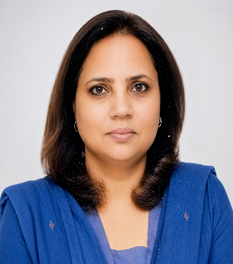
Asma Raza
Senior Corporate Lawyer
Senior Corporate Lawyer and humanitarian advocate with expertise in IP, corporate, and family law, dedicated to client service and women's rights.
Copyright Law
Official IPO-Pakistan copyright fees by type of work, the office's published eleven-month processing time, and when a newspaper advertisement is required.
Copyright in Pakistan arises on creation; registration is not what brings the right into existence. Section 39(1) of the Copyright Ordinance 1962 says the author, publisher, owner or other interested person may apply to enter particulars of the work in the Register of Copyrights. What registration buys is evidence — and, for some categories of work, a great deal of process. This page sets out what the Copyright Office charges, how long it says it takes, and where the requirements differ by type of work.
Section 42 answers this squarely. The Register of Copyrights and its indexes are prima facie evidence of the particulars entered in them, and certified copies are admissible in all courts without further proof of the original. More usefully, section 42(2) provides that a certificate of registration is prima facie evidence that copyright subsists in the work and that the person named in the certificate is the owner.
That shifts the evidential burden in an infringement action, in a customs or criminal complaint, and in a due-diligence exercise where a buyer is asked to take ownership on trust. It is the reason registration is worth its cost for commercially significant works, and the reason it is often not worth it for everything else.
Registration fees are charged by category of work, not per page or per class, and the spread is wide. The schedule published by IPO-Pakistan's Copyright Office is:
Two of those figures repay attention. A logo or label registered as an artistic work capable of use with goods or services costs three times what the same drawing costs as a plain artistic work — PKR 6,000 against PKR 2,000 — and IPO-Pakistan asks for the trade mark number of the work if it is used as a trade mark. And software is charged at PKR 5,000, more than other literary works, which is worth knowing when a portfolio of modules is being registered.
Payment is by demand draft or pay order in favour of the Director General, IPO-Pakistan.
IPO-Pakistan publishes a document checklist that differs by category. Common to all:
For artistic works only, two further items: two original newspapers in which the work has been advertised, and the trade mark number of the work if it is used as a trade mark.
This requirement is widely stated online as though it applied to every copyright application in Pakistan. It does not. The proviso to section 39(2) of the Copyright Ordinance 1962 confines it to artistic works, and sets out a sequence with its own deadlines:
IPO-Pakistan publishes a prescribed format of advertisement alongside the copyright forms. The practical consequence is that an artistic-work application has a step, a cost and an objection window that a literary or software application does not — and that a missed one-month advertisement deadline stalls the file rather than the registration simply proceeding.
Unlike the Trade Marks Registry, the Copyright Office publishes an accumulated figure as well as per-step targets. IPO-Pakistan's published averages are:
Eleven months is the registry's own service standard for an application that complies. It is not a guarantee, and it does not absorb the artistic-work advertisement sequence, an objection under section 39, or a contested rectification before the Copyright Board — none of which IPO-Pakistan publishes a figure for. The column heading in the published table reads "working days" while the entries are given in weeks and months; the entries are what the office works to.
The term does not depend on registration and is fixed by the Ordinance:
Section 40 allows any person interested in a grant of an interest in copyright, by assignment or licence, to apply on Form-III with the original instrument and a certified copy. The certified copy is retained at the Copyright Office and the original returned with a certificate of registration endorsed on it. The official fee is PKR 3,000. Section 41 covers correction of entries by the Registrar and rectification of the Register by the Copyright Board on the application of the Registrar or a person aggrieved.
Chain of title is where copyright files usually fail. Where a work was commissioned, produced by an agency, or built by contractors, the no-objection certificates and assignments IPO-Pakistan asks for at registration are the same documents a buyer or a court will ask for later. Collecting them at the point of creation is simpler than reconstructing them.
IPO-Pakistan lists its Copyright Office in Karachi, alongside the Trade Marks Registry and the Patent Office. The Copyright Board, constituted under the Ordinance, hears rectification applications, compulsory licence applications and appeals. Civil suits and criminal proceedings for infringement go to the Intellectual Property Tribunals: under section 18 of the Intellectual Property Organization of Pakistan Act 2012, all suits and other civil proceedings regarding infringement of intellectual property laws are to be instituted and tried in the Tribunal, which has exclusive jurisdiction over offences under the intellectual property laws.
The variables that decide professional cost are the number and type of works, whether chain of title is already documented, whether an artistic work also functions as a trade mark, and whether the matter is a single registration or a portfolio. Professional fees are quoted per matter.
Review protection, registration and the evidence record together. Copyright protection and registration in Pakistan
Establish who owns the work before registering it. Copyright ownership and licensing in Pakistan
Plan enforcement before it is needed. Copyright infringement and enforcement in Pakistan
Software and digital works have their own considerations. Software and digital content copyright in Pakistan
US companies and counsel can coordinate Pakistan copyright work through our US-facing guide. Pakistan copyright counsel for US clients
For registration, licensing and enforcement support, review our copyright practice. Copyright Law services in Pakistan
Official fees and forms are published by IPO-Pakistan and can be revised by notification. The figures on this page were checked against the IPO-Pakistan copyright fee schedule on 2 October 2026; the current schedule should be confirmed before any filing is made.
The official fee depends on the category of work. IPO-Pakistan charges PKR 2,000 for a literary work other than software, PKR 5,000 for a computer programme, PKR 2,000 for an artistic work, PKR 6,000 for an artistic work used or capable of being used with goods or services, PKR 10,000 for a cinematographic work and PKR 2,000 per song for a record work. Registration of an assignment on Form-III is PKR 3,000.
IPO-Pakistan publishes an accumulated average of eleven months from filing to registration — one week to acknowledgement, nine months for examination and two months to issue the certificate on compliance. That is a service standard rather than a guarantee, and it does not cover the artistic-work advertisement sequence or a contested application.
Only for artistic works. The proviso to section 39(2) of the Copyright Ordinance 1962 requires the applicant to advertise the work in a newspaper within one month of filing and send two copies of that newspaper to the Registrar, after which the Registrar must receive no objection within one further month, extendable but not beyond two months. Literary, software, cinematographic and record works are not subject to this requirement.
No. Section 39(1) is permissive — the owner or other interested person may apply. Copyright subsists without registration. What registration provides is evidence: under section 42 a certificate of registration is prima facie evidence that copyright subsists and that the person named is the owner.
For published literary, dramatic, musical and artistic works other than photographs, the author's life plus fifty years from the beginning of the calendar year following the author's death (s.18). For cinematographic works, records and photographs, fifty years from the beginning of the calendar year following publication (s.20).
Yes. A computer programme is registered on Form-II as a literary work, at an official fee of PKR 5,000, with two copies of the work, an affidavit of original creativity and, where the applicant is not the author, a no-objection certificate or assignment from the copyright owner.
IPO-Pakistan requires a no-objection certificate or an assignment of copyright from the creator or owner in favour of the applicant. For cinematographic and record works this extends to all contributors — performers, singers, lyricists and musicians.
Your contacts
Senior Corporate Lawyer
Senior Corporate Lawyer and humanitarian advocate with expertise in IP, corporate, and family law, dedicated to client service and women's rights.
Practice area
Secure your original works with our comprehensive copyright services. From registration to defending against unauthorized use, we help maintain your creative control and rights.
Share the relevant right, deadline and documents so our team can confirm the appropriate next step.