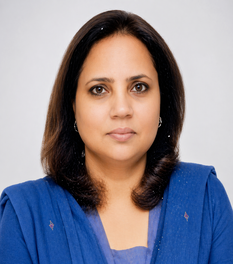
Asma Raza
Senior Partner & Advocate High Court
Senior Partner and Advocate High Court, advising on intellectual property, corporate and family law.
Design Law
Registering an industrial design in Pakistan has two kinds of cost. The official fees payable to the Intellectual Property Organization of Pakistan (IPO-Pakistan) are fixed and published, and they are the same for every applicant. Professional fees are not: they depend on how many designs and classes are filed, and on whether the Patent Office raises an objection.
This guide sets out the official fees IPO-Pakistan publishes, the processing times it publishes, and the deadlines in the Registered Designs Rules 2023 that can add forms and fees. Designs are examined and registered by the Patent Office under the Registered Designs Ordinance 2000 and those Rules. For our design practice, see industrial design registration in Pakistan.
The fees are set by the First Schedule to the Registered Designs Rules 2023 (rule 3(1)). IPO-Pakistan’s design “Fee & Forms” page lists the same figures:
| Form | What it is for | Fee (PKR) |
|---|---|---|
| D-1 | Application to register a design: single article | 3,000 |
| D-1 | Application to register a design: set of up to five articles | 5,000 |
| D-1 | Each article beyond five in a set | 1,000 each |
| D-2 | Amendment, alteration or correction of a design or design application | 1,500 |
| D-3 | Certified copy or extract of the register | 1,000 |
| D-4 | Extension of time under rule 34 | 1,000 a month |
| D-4 | Two months’ extension to remove objections under rule 13 | 2,000 |
| D-4 | Two months’ extension under rule 17 (restoring a design after a missed renewal fee) | 3,000 |
| D-5 | Issue of the design registration certificate | 3,000 |
| D-5 | Duplicate registration certificate | 3,000 |
| D-5 | Renewal for the second period | 4,000 |
| D-5 | Renewal for the third and final period | 6,000 |
| D-6 | Request for the grounds of the Registrar’s decision | 1,000 |
| D-7 | Application to cancel a design under section 10 | 5,000 |
| D-8 | Counter-statement against a cancellation application | None listed |
| D-9 | Surrender of a design, or expiry of a licence or mortgage | 1,000 |
| D-10 | Recordal of an assignment, licence or mortgage for one design | 2,000 |
| D-11 | Design search or inspection of the register | 1,000 |
| D-12 | Application following a court order | 1,000 |
| D-13 | Authorisation of an agent, lodged with the applicable stamp duty (rule 29) | Stamp duty (no PKR amount listed) |
| D-14 | Notice of intention to attend a hearing | 1,000 |
Each fee is paid when the form is filed (rule 3(4)), and fees are not refunded, whether or not the proceeding takes place (rule 3(5)). The Rules allow payment by pay order, postal order, demand draft on a scheduled bank, or electronic means or another manner notified by IPO-Pakistan, payable to the Director General (rule 3(2)). IPO-Pakistan’s 2024 filing guidelines refer to a cheque in favour of the Director General. Check the accepted method with the Patent Office before you pay.
These examples are our arithmetic on the published figures. They assume no objection, no extension and no hearing.
| Example | Official fees | Total (PKR) |
|---|---|---|
| One design for a single article | 3,000 on filing (Form D-1) + 3,000 for the certificate (Form D-5) | 6,000 |
| One design for a set of seven articles | 5,000 + 2,000 for the two articles beyond five on filing + 3,000 for the certificate | 10,000 |
| A single-article design kept for the full thirty years | 6,000 to register + 4,000 for the second period + 6,000 for the third | 16,000 |
A “set of articles” means articles of the same general character, ordinarily sold or used together, that carry the same design or minor variations of it (section 2(m)). Whether articles form a set is decided by the Registrar.
Each class of articles needs its own application. Where the same design is to be registered for more than one class, a separate application is made for each class, and each is treated as a distinct application (rule 8(4)). Each one carries its own filing and certificate fees.
IPO-Pakistan publishes average processing times for its Design Office. They are averages, not guarantees:
| Stage | IPO-Pakistan published average |
|---|---|
| Acknowledgement receipt after filing (receipt of documents, fee check and data entry) | One week |
| First examination report (formal and substantive examination) | Three months |
| Review of the applicant’s reply | One month |
| Registration and publication once all requirements are met | Two months |
| Total from filing to registration | Six months |
| Design search report | One month |
| Requests that need no hearing, such as a certified copy, a change of name or address, a duplicate certificate or the recordal of an assignment or licence | One month |
| A cancellation proceeding | One year |
The Rules also set targets for the Office. The examiner reports to the Registrar within two months of receiving the application (rule 13(2)). If there is no objection, an acceptance letter issues within one month (rule 13(3)). Information about the rights in a registered design, requested on Form D-11, is to be given within ten working days (rule 27).
These deadlines decide whether extra forms and fees are needed:
A registration lasts ten years from the date of registration (section 7(1)). A design is registered as of the date of the application, unless the Registrar directs another date (section 5(5)). A design filed with a priority claim is registered as of the date of the first application in the Convention country (section 12(2)).
The Registrar extends the registration for a second ten-year period and then a third, if the extension is applied for and the fee is paid before the current period expires (section 7(3)). The application is made on Form D-5 (rule 16). The maximum term is therefore thirty years. The official fees are PKR 4,000 for the second period and PKR 6,000 for the third.
If the deadline is missed, the Ordinance allows the extension to be applied for and paid within a further period of no more than six months, with an additional fee (section 7(3)). Under the Rules, the proprietor applies on Form D-4 within six months of the date on which the design ceased to have effect, with the unpaid fee, the late fee and a verified statement of the circumstances (rule 17).
No infringement proceedings can be taken for acts committed before the date on which the registration certificate is issued (section 5(5)).
The published schedule is the floor, not the whole budget. It does not include:
Some subject matter cannot be registered as a design. The Registrar refuses designs for paintings, sculptures, drawings, engravings, photographs, architectural works of art, other works of artistic craftsmanship, designs contrary to public order or morality, and trade marks and trade dress (rule 11(1)). Words, letters or numerals that are not essential to the design are removed from the representation (rule 11(2)).
An applicant can deal with the Registrar directly or through an authorised agent (rule 28). The agent is appointed on Form D-13 (rule 29). For design matters, the Rules define an agent as one registered under rule 45 of the Patents Rules 2003 (rule 2(1)(a)), and a person may authorise a legal practitioner or a patent agent to act (rule 32(2)). The Registrar may refuse to recognise an agent who is not entitled to practise as a patent agent under the Patents Ordinance 2000 (section 26). Registered trade mark agents are on a separate register, kept under the Trade Marks Rules 2004.
Every applicant gives an address for service in Pakistan (rule 32(1)). If the applicant’s own address is outside Pakistan, the Registrar need not examine the application until an address for service in Pakistan is provided (rule 32(4)). Foreign applicants can meet this requirement through Pakistan IP local counsel. Patent applications go to the same Patent Office; the steps for overseas applicants are in our guide to Pakistan patent filing for foreign applicants.
A registered design protects the appearance of an article: features of shape, configuration, pattern or ornament, applied by an industrial process and judged by the eye. It does not cover a method or principle of construction, or features dictated only by technical and functional considerations (section 2(e)). The design must be new or original. It is not new if, before the filing date, the same design was registered in Pakistan or published anywhere in the world (section 3(2)). A disclosure in the twelve months before the filing or priority date is not counted against novelty if it resulted from acts of the applicant or a predecessor in title, or from an abuse by a third party (section 3(3)); the application must include a statement claiming this (rule 9).
A product’s name and logo are protected differently. Trade marks are excluded from design registration (rule 11(1)) and are registered at the Trade Marks Registry instead. The official trade mark fees are in our trademark registration cost and timeline guide. At Raza & Associates, Hashim Raza is a Registered Trade Mark Agent with IPO-Pakistan (Trade Marks Registry), registration No. TM-215/20, on the Register of Trade Mark Agents since 25 January 2019.
Copyright is a third route, and rule 11(3) marks the line. A design is treated as used as a model or pattern to be multiplied by an industrial process, within the meaning of the Copyright Ordinance 1962, when it is reproduced, or meant to be reproduced, in more than fifty single articles (unless all of them together form a single set), or when it is applied to printed paper, carpets and floor-cloths, textile goods or laces not made by hand. Copyright fees and timings are in our copyright registration cost and timeline guide.
The fees, times and rules on this page come from the official sources below. Each was checked on 13 October 2026.
Raza & Associates is listed in Tier 3 of The Legal 500 ranking for Pakistan intellectual property. It is an intellectual property and corporate law firm, established in 2005, with its head office in Lahore and offices in London and Singapore.
The firm’s design services cover filing strategy, application preparation, prosecution support, renewals, portfolio management, assignments, licensing and enforcement coordination; see our design law practice. The ranking, the firm’s awards and its memberships are listed on our Legal 500 ranking, awards and memberships page. To discuss a design, contact us.
This guide summarises the Registered Designs Ordinance 2000, the Registered Designs Rules 2023 (S.R.O. 341(I)/2023), and IPO-Pakistan’s design fee page, average process time page and 2024 design filing guidelines, as read on 13 October 2026 (see the official sources above). Fees change, so check IPO-Pakistan’s current fee page before you file. This guide is not legal advice on any particular matter.
IPO-Pakistan’s published fee for Form D-1 is PKR 3,000 for a single article, or PKR 5,000 for a set of up to five articles plus PKR 1,000 for each article beyond five. After acceptance, the registration certificate on Form D-5 costs PKR 3,000. A single-article design with no objection therefore carries PKR 6,000 in official fees.
IPO-Pakistan’s published average is six months from filing to registration: one week for the acknowledgement, three months to the first examination report, one month to review a reply and two months for registration and publication. These are averages, not guarantees.
Ten years from the date of registration. It can be extended for a second and a third period of ten years each, so thirty years in total (section 7, Registered Designs Ordinance 2000).
PKR 4,000 for the second period and PKR 6,000 for the third and final period, on Form D-5, applied for before the current period expires (rule 16, Registered Designs Rules 2023). A late extension is possible within a further six months with an additional fee (section 7(3); rule 17).
Yes, if the first application was made in a Convention country, which includes every member of the World Trade Organization. The Pakistan application is filed within six months of the first application (section 12), and a certified copy of the first application within three months of the Pakistan filing date (rule 12(3)).
No. Where a design is to be registered for more than one class of articles, a separate application is made for each class, and each is treated as a distinct application with its own fees (rule 8(4), Registered Designs Rules 2023).
The applicant can act directly or through an agent appointed on Form D-13. The Rules allow a legal practitioner or a patent agent to act (rule 32(2)), and the Registrar may refuse an agent who is not entitled to practise as a patent agent (section 26, Registered Designs Ordinance 2000). Every applicant also needs an address for service in Pakistan (rule 32).
Your contacts
Senior Partner & Advocate High Court
Senior Partner and Advocate High Court, advising on intellectual property, corporate and family law.
Partner
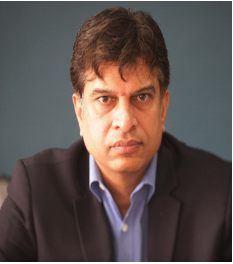
Partner and Registered Trade Mark Agent (IPO-Pakistan, TM-215/20), with over 30 years of experience in IP law and SME development.
Practice area
Protect the unique appearance of your products with our design law expertise. We help you register and enforce your design rights in Pakistan.
Share the relevant right, deadline and documents so our team can confirm the appropriate next step.