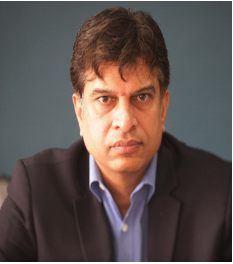

Asma Raza
Senior Partner & Advocate High Court
Senior Partner and Advocate High Court, advising on intellectual property, corporate and family law.
Trademark Law
How to search a trade mark in Pakistan: the official TM-55 search, a personal search at IPO-Pakistan, and what a clearance review adds before you file.
Before filing a trade mark in Pakistan, you want to know two things: whether someone already owns the same or a similar mark, and whether the Registrar is likely to object to yours.
The Trade Marks Rules provide two kinds of search of the Registry's records. A clearance review goes further: it reads the results against the law and covers risks that a register search cannot show. This guide explains each step and the official fees involved.
IPO-Pakistan's own filing guidelines describe the search as optional but advisable: "It is advisable that a search may be made… to check whether there are any identical or similar marks present on the Register."
Rule 87 of the Trade Marks Rules 2004 lets any person ask the Registrar, on Form TM-55, to search goods or services "classified in any one class of the Fourth Schedule". The search checks whether any mark "in the Register or among pending applications for registration" resembles the mark shown on the form. The Registrar informs the person of the result.
The result is a list of potentially conflicting marks. It does not tell you whether the Registrar will object, or whether an owner will oppose.
Rule 88 allows a person to "conduct personal search on payment of the fee" in respect of goods or services in any one class. The aim is to see whether any registered mark, or any pending application, resembles the mark the person wants to register.
The First Schedule fee is PKR 300 "for permission to search amongst the classified representations of trade marks, for each quarter of an hour". IPO-Pakistan's 2019 filing guidelines list the personal search facility at the Trade Marks Registry, Karachi; IPO headquarters, Islamabad; and the IPO Regional Office, Lahore. Confirm current availability at the office you plan to use before travelling.
A personal search costs little in official fees, but you do the comparing yourself.
Rules 87 and 88 provide for a search by the Registrar and a personal search. Whether IPO-Pakistan offers any online search facility, and on what terms, should be confirmed with your Pakistan counsel at the time of searching.
What is public online is the Trade Marks Journal. IPO-Pakistan publishes it monthly as an e-Journal, and every accepted application is advertised in it (s.28(1) of the Trade Marks Ordinance 2001). The Journal is not a searchable register. It does not show applications still awaiting examination, and it lists accepted applications one issue at a time. It is a watching tool, not a search tool: a conflicting application spotted there can be opposed within two months. Trademark opposition in Pakistan
Even a well-run TM-55 search leaves gaps. The Ordinance explains why:
How the 45 classes work, and why the class number is not the test for conflict, is explained in the classes guide. Trademark classes in Pakistan
A clearance review takes the search results and reads them against the law. It should:
No search or review can guarantee that an application will be accepted, or that no one will oppose it. What it does is let you decide before the filing and branding costs are committed.
If the mark is clear enough to proceed, the application is filed on Form TM-1, one class per application (rr.12(2), 13 and 14). The official filing fee is PKR 3,000 per class. Trademark registration procedure in Pakistan
The official fees for each later stage, and IPO-Pakistan's published processing times, are in the cost guide. Trademark registration cost and timeline in Pakistan
Brand owners outside Pakistan should also read how a foreign filing works. Pakistan trademark filing for foreign applicants
Raza & Associates was established in 2005 and is listed in Tier 3 of The Legal 500 ranking for Pakistan intellectual property. Its trademark practice covers clearance searches, filing, prosecution, objections, oppositions, renewals, assignments, licensing and enforcement, for local and foreign applicants. Offices: Lahore (head office), London and Singapore.
Request a Pakistan clearance and filing review from our trademark team. Pakistan trademark lawyers
This guide summarises the Trade Marks Ordinance 2001, the Trade Marks Rules 2004, the First Schedule fees and IPO-Pakistan's published pages as read on 5 October 2026. It is not legal advice on any particular matter.
The Rules provide two routes. You can file Form TM-55 asking the Registrar to search one mark in one class (r.87): PKR 1,000 per class, with a published target of fifteen days. Or you can make a personal search (r.88) at PKR 300 per quarter of an hour; IPO-Pakistan's 2019 guidelines list the facility in Karachi, Islamabad and Lahore.
Marks on the Register and pending applications that resemble your mark, for goods or services in the one class you name (r.87). It does not cover unregistered rights, or marks in other classes.
No. IPO-Pakistan's guidelines describe it as optional but advisable.
Not necessarily. The Registrar may still object on absolute grounds (s.14). Owners of unregistered rights or reputed marks may oppose (ss.17(3)–(4), 29(4)). A search reduces the risk; it does not remove it.
Usually, yes. Conflict under s.17(2) depends on similar goods or services, which can sit in different classes. The Registrar's own search covers goods of the “same description” (r.26).
A search lists potentially conflicting marks. A clearance review assesses them against the Trade Marks Ordinance, checks the mark's own registrability, looks at the market and sets out the filing choices.
Your contacts
Senior Partner & Advocate High Court
Senior Partner and Advocate High Court, advising on intellectual property, corporate and family law.
Partner
Partner and Registered Trade Mark Agent (IPO-Pakistan, TM-215/20), with over 30 years of experience in IP law and SME development.
Senior Associate
Senior Associate skilled in international commercial law, cyber security, and M&A, with extensive experience in corporate matters and regulatory compliance.
Practice area
We help protect your brand identity through trademark registration, enforcement and litigation in Pakistan.
Share the relevant right, deadline and documents so our team can confirm the appropriate next step.