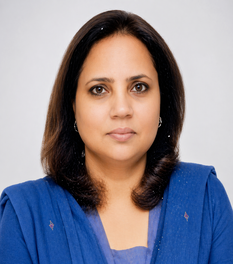
Asma Raza
Senior Partner & Advocate High Court
Senior Partner and Advocate High Court, advising on intellectual property, corporate and family law.
Trademark Law
A trade mark registered in Pakistan protects the brand in Pakistan only. To protect it in an export market, a Pakistani business has two routes: file a national application in each country, or file one international application through IPO-Pakistan under the Madrid Protocol and name the countries it wants. Pakistan has been a Madrid member since 24 May 2021. Chapter XA of the Trade Marks Ordinance 2001 (sections 92A to 92I), inserted by the Trade Marks (Amendment) Act 2023, sets out how IPO-Pakistan handles both directions.
This guide is for Pakistani manufacturers, exporters, franchisors and online sellers who want their brand protected abroad. It covers who can file through IPO-Pakistan, the Pakistani “basic mark” every international application rests on, the official fees, the five-year dependency that catches many filers out, and when national filings are the better choice. “TMO” means the Trade Marks Ordinance 2001 as amended in 2023. Official sources were checked on 13 October 2026.
The Madrid System has 117 members covering 133 countries, according to WIPO’s members page (read 13 October 2026). Some members are regional organisations: designating the European Union, for example, covers all EU member states in one designation. A country that is not a member can only be covered by a national filing.
IPO-Pakistan acts as “office of origin” for an applicant who meets one of three conditions (Madrid Protocol, Article 2(1); IPO-Pakistan’s Madrid pages):
The TMO explains that a real and effective establishment is any establishment where bona fide industrial or commercial activity takes place; it need not be the principal place of business (s.92B(i), Explanation). A foreign-owned company with a genuine factory or office in Pakistan can therefore qualify. The applicant must be the same person who holds the Pakistani basic application or registration (s.92D(1)).
Every international application filed through IPO-Pakistan rests on a Pakistani “basic mark”: an application under section 22 TMO or a registration under section 33 TMO (ss.92B(ii)–(iii), 92D(1)).
Clear the mark before you file. An objection or opposition against the Pakistani basic mark can bring down every country you designate (see the five-year dependency below). Our guide to trademark search and clearance in Pakistan sets out what to check.
Countries can be added later by a subsequent designation, without a new application (s.92D(2); Article 3ter(2)).
WIPO’s fees are in Swiss francs (CHF). They are payable in addition to IPO-Pakistan’s handling fee and the official fees for the Pakistani basic application.
| Fee | Amount | When it applies |
|---|---|---|
| IPO-Pakistan handling fee | PKR 5,000 | Each international application filed through IPO-Pakistan |
| WIPO basic fee | CHF 653 (CHF 903 if the mark is in colour) | Each international application (items 2.1.1–2.1.2) |
| Supplementary fee | CHF 100 per class | Each class beyond three (item 2.2) |
| Complementary fee | CHF 100 per designation | Each designated member that does not charge an individual fee (item 2.3) |
| Individual fee | Set by each member | Members that charge their own fee in place of the complementary fee (item 2.4) |
| Subsequent designation | CHF 300, plus each added country’s fee | Adding countries later (item 5.1) |
| Renewal | CHF 653, plus each renewed country’s fee | Every ten years (item 6.1) |
| Total transfer | CHF 177 | Recording a new owner (item 7.1) |
Sources: WIPO Schedule of Fees (as in force from 1 February 2023) and IPO-Pakistan’s filing requirements, both checked 13 October 2026.
The Pakistani basic application’s official fees are set out in our guide to trademark registration cost and timeline in Pakistan. WIPO’s online fee calculator gives the total for a chosen list of countries and classes. If a designated office refuses the mark, answering the refusal usually means instructing a local representative in that country, at that representative’s fees.
For five years from the international registration date, the international registration depends on the Pakistani basic mark. If, within those five years, the basic application or registration is withdrawn, cancelled, expires or is finally refused for some or all goods or services, protection under the international registration ceases to the same extent in every designated country (s.92D(5); Article 6(3)).
After five years the international registration becomes independent of the Pakistani mark. Keep the basic mark in use and renewed in Pakistan in any case: our article on non-use revocation of trade marks in Pakistan explains the risk of non-use.
For a Pakistani brand going to the United States, the United Kingdom or the European Union, Raza & Associates acts on the Pakistani side, and counsel qualified in that market acts before its trade mark office. Each guide explains who may represent you there and when that counsel must be appointed:
A designated office that objects sends a provisional refusal through WIPO, which forwards it to the holder (Common Regulations, Rule 17). The refusal states the grounds and the time to respond. The response is made under that country’s law, and many offices require a local representative to file it. IPO-Pakistan has no role in a refusal issued abroad.
Where there is no refusal, or a refusal is withdrawn, the office may send a statement of grant of protection (Rule 18ter). Diarise each designated office’s refusal period, and appoint counsel in the country concerned as soon as a refusal arrives, because response periods vary from country to country.
Many brand owners combine the two: Madrid for most countries, national filings where the system does not reach or a local form of the mark is needed.
| Event | Time limit | Source |
|---|---|---|
| Claiming priority from the Pakistani application | File the international application within 6 months of the Pakistani filing date | Paris Convention Art. 4; Madrid Protocol Art. 4(2) |
| Keeping IPO-Pakistan’s receipt date as the international registration date | WIPO must receive the application within 2 months | Madrid Protocol Art. 3(4) |
| Refusal by a designated office | 12 months, or 18 months where the member has declared the longer period | Madrid Protocol Art. 5(2) |
| Dependency on the Pakistani basic mark | 5 years from the international registration date | TMO s.92D(5); Madrid Protocol Art. 6(3) |
| Transformation after cancellation | National applications within 3 months of the cancellation | Madrid Protocol Art. 9quinquies |
| Renewal of the international registration | Every 10 years, with a 6-month grace period on payment of a surcharge | TMO s.92G(1)–(2); Madrid Protocol Arts. 6(1), 7(4) |
Sources: Trade Marks (Amendment) Act 2023 and the Madrid Protocol, checked 13 October 2026.
Raza & Associates is an intellectual property and corporate law firm based in Lahore and established in 2005. It is listed in Tier 3 of The Legal 500 ranking for Pakistan intellectual property. Our trademark practice handles trade mark registration and search work in Pakistan and internationally.
Under the TMO, any act other than making an affidavit may be done by a duly authorised agent registered with the Trade Marks Registry (s.127(1)); an agent is appointed on Form TM-48 and must be a legal practitioner or a registered trade mark agent (r.10, Trade Marks Rules 2004). Hashim Raza of the firm is a Registered Trade Mark Agent, IPO-Pakistan (Trade Marks Registry), Reg. No. TM-215/20, on the register since 25 January 2019.
For a Pakistani brand going abroad, we can:
If your brand contains a place name, also read our guide to geographical indication registration in Pakistan.
This guide is general information, not legal advice. Laws and official fees change, so check the current position before you act.
Yes. Pakistan has been a member of the Madrid Protocol since 24 May 2021, so a Pakistani applicant can file one international application through IPO-Pakistan, based on a Pakistani trade mark application or registration, and designate other Madrid members (Trade Marks Ordinance 2001, s.92D). Countries outside the Madrid System need national filings.
No. A pending Pakistani application is enough (s.92D(1), Trade Marks Ordinance 2001). But for five years the international registration depends on that application: if it is refused, withdrawn or cancelled, protection abroad falls away to the same extent (s.92D(5)).
WIPO charges a basic fee of CHF 653 (CHF 903 for a colour mark), CHF 100 for each class beyond three, and a complementary fee of CHF 100 or an individual fee for each designated country (Schedule of Fees, in force from 1 February 2023). IPO-Pakistan adds a PKR 5,000 handling fee, and the Pakistani basic application has its own official fees. WIPO's fee calculator gives the total.
The international registration takes the date IPO-Pakistan received the application if WIPO receives it within two months (Madrid Protocol, Article 3(4)). Each designated country then has 12 months, or 18 months if it has declared the longer period, to refuse protection (Article 5(2)).
If this happens within five years of the international registration date, protection under the international registration ends to the same extent in every designated country (s.92D(5); Article 6(3)). The holder can then, within three months, file national applications in those countries that keep the international registration date (Article 9quinquies).
Any Madrid member. WIPO's members page (read 13 October 2026) lists 117 members covering 133 countries, including regional members such as the European Union. Check the current list before filing; a country that is not a member needs a national application.
Yes, by a subsequent designation recorded against the existing international registration, without a new application (s.92D(2), Trade Marks Ordinance 2001). WIPO's basic fee for a subsequent designation is CHF 300, plus the fee for each country added.
A national of Pakistan, a person domiciled in Pakistan, or a person with a real and effective industrial or commercial establishment in Pakistan, which need not be the principal place of business (Madrid Protocol, Article 2(1); s.92B(i), Trade Marks Ordinance 2001). The applicant must also hold the Pakistani basic application or registration.
Your contacts
Senior Partner & Advocate High Court
Senior Partner and Advocate High Court, advising on intellectual property, corporate and family law.
Partner
Partner and Registered Trade Mark Agent (IPO-Pakistan, TM-215/20), with over 30 years of experience in IP law and SME development.
Senior Associate
Senior Associate skilled in international commercial law, cyber security, and M&A, with extensive experience in corporate matters and regulatory compliance.
Practice area
We help protect your brand identity through trademark registration, enforcement and litigation in Pakistan.
Share the relevant right, deadline and documents so our team can confirm the appropriate next step.