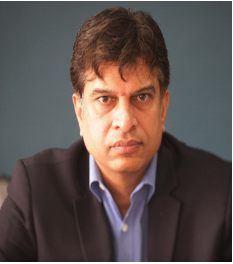

Asma Raza
Senior Partner & Advocate High Court
Senior Partner and Advocate High Court, advising on intellectual property, corporate and family law.
Trademark Law
If someone in Pakistan is selling goods or offering services under your trade mark, or under a mark close enough to confuse your customers, the law gives you two main civil claims. Infringement applies when your mark is registered. Passing off protects a mark that is not registered, and the two are often pleaded together. Both are heard by the Intellectual Property Tribunals, and deliberate copying can also be a criminal offence.
Below, TMO means the Trade Marks Ordinance 2001 (as amended in 2023) and the IPO Act means the Intellectual Property Organization of Pakistan Act 2012.
Registration gives the owner exclusive rights in the mark, which are infringed by use of the mark in Pakistan without the owner’s consent (s.39(2) TMO). Under section 40, a person infringes by using, in the course of trade:
Liability is not limited to the maker. A person who sells or holds for sale goods bearing an infringing mark is treated as a party to the infringement unless it proves that it took all reasonable precautions and had no reason to suspect the mark, and gave the tribunal on demand all it knew about its suppliers, or that it otherwise acted innocently (s.40(8)). A printer who knowingly applies the mark to labels or packaging without authority is treated as a party too (s.40(7)).
The owner’s rights run from the date of registration, which is the filing date (s.33(3)), but infringement proceedings cannot begin until the mark is actually registered (s.39(5)). While an application is pending, the claim is in passing off.
The defendant may rely on good-faith use of its own name, descriptive use, use showing the purpose of spare parts, comparative advertising or use of a disclaimed part (s.42). A registration is prima facie evidence of validity (s.43) and, after five years, conclusive unless obtained by fraud or contrary to s.14(3) (s.44). Knowingly tolerating a later registered mark for five continuous years ends the right to challenge it, unless it was applied for or used in bad faith (s.81).
The TMO does not affect the right to sue for passing off goods or services as someone else’s (s.46(3)). Passing off protects the goodwill in a name, logo, get-up or trade dress, and it is the fallback when a copy falls outside the goods or services a registration covers. Courts in Pakistan apply the common-law elements: goodwill attached to your goods or services in Pakistan; a misrepresentation by the defendant, intended or not, likely to lead the public to think its goods or services are yours or connected with you; and damage, or a real likelihood of damage, to that goodwill.
The TMO also makes unfair competition unlawful: acts contrary to honest business practices, including creating confusion with a competitor’s business or goods, misleading indications and fraudulently applying to register a trade mark, actionable before an IP Tribunal (s.67).
The practical difference is proof: a registration certificate establishes your rights, while passing off needs evidence of reputation such as sales, advertising and length of use.
All suits and other civil proceedings regarding infringement of the intellectual property laws must be instituted and tried in an IP Tribunal, which also has exclusive jurisdiction over offences under those laws (IPO Act s.18), and no other court may exercise jurisdiction in those matters (s.17(4)). The TMO agrees: trade mark suits may be filed only in an IP Tribunal (s.117). The Tribunal has the powers of a civil court under the Code of Civil Procedure 1908 and, in criminal cases, those of a Court of Sessions (IPO Act s.17(1)).
IPO-Pakistan lists seven Tribunals (read on 12 October 2026): Lahore I and Lahore II, Multan, Rawalpindi, Islamabad (which also covers Khyber Pakhtunkhwa, Gilgit-Baltistan and AJK), Karachi and Quetta, each with its own territory. Which one hears a suit depends on the ordinary rules on where a suit may be filed; our guide to IP lawyers in Lahore explains where a Lahore dispute is heard. An appeal against the Tribunal’s final judgment or order lies to the High Court within thirty days (IPO Act s.19).
Many brand disputes are decided at the interim stage. The Tribunal can grant temporary injunctions under Order XXXIX, rules 1 and 2, of the Code of Civil Procedure, and courts in Pakistan generally ask whether the claimant has a prima facie case, whether the balance of convenience favours an injunction, and whether refusal would cause irreparable loss. What usually helps:
A licensee can apply for interim relief on its own, even where the owner would otherwise have to be joined (provisos to s.77(2) and s.78(4)).
The owner can obtain all the relief by way of damages, injunctions, accounts or otherwise that is available for infringement of any other property right (s.46(2)). In practice the claimant asks the Tribunal for:
Delivery up must be sought within three years of the mark being applied to the goods or material, or the articles being made, with more time for disability, fraud or concealment (s.50). Losses suffered by the owner’s licensees are taken into account (s.77(4)).
Counterfeiting can be prosecuted as well as sued on. Applying a false trade description to goods or services is an offence (s.99 TMO), and a false trade description includes any mark applied to goods in a way likely to make people believe they are someone else’s merchandise (s.2(xviii)(c)).
| Offence under the TMO | Imprisonment | Fine | Section |
|---|---|---|---|
| Applying a false trade description, first conviction (unless the accused proves there was no intent to defraud) | 3 months to 2 years | At least PKR 50,000 | s.99 |
| Second or later conviction under s.99 | 6 months to 3 years | At least PKR 100,000 | s.100 |
| Falsely representing a mark as registered | 1 to 6 months | At least PKR 20,000 | s.102(2) |
Each penalty is imprisonment, a fine, or both. Source: Trade Marks Ordinance 2001 as amended in 2023 (IPO-Pakistan text), checked 13 October 2026.
IPO-Pakistan’s police guidelines also reproduce the Pakistan Penal Code offences of counterfeiting a trade mark (s.483) and selling goods marked with a counterfeit trade mark (s.486). Section 478 of the Code still defines a trade mark by reference to the repealed Trade Marks Act 1940, so how these sections apply to marks registered under the 2001 Ordinance should be confirmed case by case. IP offences are tried only by an IP Tribunal (IPO Act s.18(2)), from day to day, and are to be disposed of within ninety days (s.15). The Tribunal may direct that up to half of a fine be paid to the right holder as compensation, without affecting any civil claim (s.105 TMO).
A complaint can start with IPO-Pakistan. Under its complaint procedure of 25 March 2024, the complainant files the registration certificates, evidence of the infringement and an affidavit that no case on the matter is pending in court. The alleged infringer may be asked to respond within three days, the Trade Marks Registry gives a prima facie opinion, and if infringement appears established the matter goes to the law enforcement agencies. Whether the police or the Federal Investigation Agency (FIA) acts depends on the offence and the agency’s jurisdiction. The criminal route suits clear counterfeiting; a dispute over a look-alike name or get-up is usually better run as a civil claim.
A legal notice (cease and desist letter) usually asks the recipient to stop, deliver up or destroy stock, disclose suppliers and give written undertakings by a deadline. It must be accurate: a person aggrieved by an unjustified threat of infringement proceedings can sue for a declaration, an injunction and damages (s.52(1) and (2)), unless the acts threatened do infringe (s.52(3)). Merely notifying someone that a mark is registered or applied for is not a threat (s.52(5)), and a lawyer is not liable for acts done professionally for a client (s.52(6)).
A cautionary notice is a public notice, usually in newspapers, stating that a business owns a mark and warning others against copying it. No section of the TMO creates or regulates it. It can deter casual copying and help show later that a copier knew of your mark, which bears on bad faith and on a seller’s claim of innocence under s.40(8). It cannot create rights or replace registration or a suit. Keep the wording accurate: calling an unregistered mark registered is an offence (s.102(1)(a), penalty in the table above) and can lead the Registrar to refuse the application (s.102(4)), and naming particular traders can raise the groundless-threats issue under s.52.
The owner of a mark entitled to protection under the Paris Convention as a well-known trade mark can obtain an injunction against use in Pakistan of an identical or deceptively similar mark for identical or similar goods or services where confusion is likely, or where the use dilutes the mark (s.86(3)). The owner must have a link to a Convention country, whether or not it trades in Pakistan (s.86(1)), and well-known status is judged on the factors in s.86(2) without requiring registration or sales in Pakistan, subject to acquiescence (s.86(4)). When the copier has also filed or registered the mark, see trademark squatting in Pakistan.
The owner of a registered mark can also ask the customs IPR enforcement authorities to treat infringing imports as prohibited goods (TMO ss.53 to 66), and the Customs Rules 2001 set out a separate procedure (rr.678 to 686, added by S.R.O. 170(I)/2017). After a seizure under the TMO procedure, the owner has ten working days to sue in the IP Tribunal and notify the authorities, extendable once by up to ten working days (ss.57 and 60). If you expect counterfeit shipments, take advice before they arrive.
| Step | Time limit | Source |
|---|---|---|
| Opposing a conflicting application | 2 months from advertisement in the Trade Marks Journal; up to 2 more months in total if the Registrar allows | TMO s.28(2) |
| Response to an IPO complaint by the alleged infringer | 3 days from IPO’s letter | IPO-Pakistan complaint SOP, 25 March 2024 |
| Trial of an IP offence | To be disposed of within 90 days | IPO Act s.15 |
| Appeal against the Tribunal’s final judgment or order | 30 days, to the High Court | IPO Act s.19 |
| Registry step that often runs alongside a dispute | Form | Official fee |
|---|---|---|
| Official search of the Register, per class | TM-55 | PKR 1,000 |
| Notice of opposition, per application opposed | TM-5 | PKR 9,000 |
| Application under s.73, 80 or 96 to rectify the Register or remove a mark | TM-26 | PKR 2,250 |
| Notice of intention to attend a hearing, per party | TM-7 | PKR 600 |
Sources: Trade Marks Ordinance 2001, IPO Act 2012, IPO-Pakistan complaint SOP and IPO-Pakistan trademark fees and forms, checked 13 October 2026. Fees change, so check the current schedule before filing.
Raza & Associates was established in 2005 and is listed in Tier 3 of The Legal 500 ranking for Pakistan intellectual property. Its trademark law practice covers dispute resolution, infringement proceedings, passing off actions and enforcement, and its IP enforcement practice handles counterfeit goods, domain name and marketplace misuse, legal notices, settlement and litigation.
Registry steps that run alongside a dispute, such as an opposition or an invalidity application, may be taken before the Registrar by a registered trade mark agent (s.127 TMO). Hashim Raza of the firm is a Registered Trade Mark Agent, IPO-Pakistan (Trade Marks Registry), Reg. No. TM-215/20, on the register since 25 January 2019. Where label artwork is copied too, see copyright infringement and enforcement in Pakistan. Overseas clients can use our Pakistan IP local counsel service.
This guide summarises the TMO, the IPO Act and IPO-Pakistan’s complaint procedure, police guidelines, Tribunal list and fee schedule as read on 12 and 13 October 2026. It is general information, not legal advice on any particular matter.
Yes. Infringement of a registered trade mark is actionable by its proprietor (s.46(1), Trade Marks Ordinance 2001), wherever the proprietor is based, and the suit is filed in the IP Tribunal for the area concerned. A foreign owner usually acts through a Pakistani advocate under a power of attorney. In proceedings before the Registrar, an applicant or opponent that does not reside or carry on business in Pakistan must give an address for service in Pakistan (s.126(1)).
Unless the licence says otherwise, a licensee can call on the owner to take proceedings. If the owner refuses, or does nothing for two months, the licensee may sue in its own name, with the owner joined as a party (s.77(1) and (2)). An exclusive licence can give the licensee the rights and remedies of an assignee (s.78). Until an application to record the licence is made, the licensee does not have this protection (s.70(3)(b)).
Often it will. A defendant may apply for a declaration that the registration is invalid (s.80) or for its revocation because the mark has not been genuinely used (s.73). If proceedings concerning the mark are pending in the High Court, such an application must be made there (ss.73(4) and 80(4)). Check the registration and your evidence of use before you sue.
Yes, where a listing uses the registered mark, or a deceptively similar one, in the course of trade for the goods or services concerned (s.40). Sellers are treated as parties to the infringement unless they show they acted innocently (s.40(8)). Marketplaces also run their own reporting procedures, which can be used alongside a legal notice or a suit.
In urgent cases, yes. Under Order XXXIX, rule 3 of the Code of Civil Procedure 1908, notice of an injunction application is normally given to the other side first, but the court may grant an injunction without notice where the delay would defeat its object, recording its reasons. The defendant can then apply to have the order discharged, varied or set aside (Order XXXIX, rule 4).
Sometimes. Infringement extends to goods of the same description and to closely related goods and services (s.40(3)), and to unrelated goods or services where the mark is well known or has a reputation in Pakistan and the use takes unfair advantage of it or harms it (s.40(4)). Beyond that, the claim is usually in passing off, which needs evidence of goodwill in Pakistan.
Your contacts
Senior Partner & Advocate High Court
Senior Partner and Advocate High Court, advising on intellectual property, corporate and family law.
Partner
Partner and Registered Trade Mark Agent (IPO-Pakistan, TM-215/20), with over 30 years of experience in IP law and SME development.
Senior Associate
Senior Associate skilled in international commercial law, cyber security, and M&A, with extensive experience in corporate matters and regulatory compliance.
Practice area
We help protect your brand identity through trademark registration, enforcement and litigation in Pakistan.
Share the relevant right, deadline and documents so our team can confirm the appropriate next step.