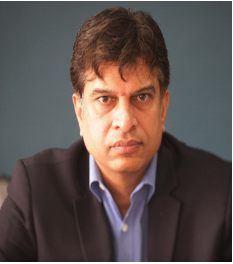

Asma Raza
Senior Partner & Advocate High Court
Senior Partner and Advocate High Court, advising on intellectual property, corporate and family law.
Trademark Law
Trademark squatting is when someone else files or registers your brand in Pakistan before you do. Often it is a former distributor, importer or agent. Sometimes it is a trader who saw the brand abroad and expects it to arrive. The filing may block your own application, and a registered squatter may try to stop your imports or sell the mark back to you.
Pakistani law gives a brand owner several ways to respond. Which one fits depends mainly on where the mark stands on the Register: still pending, already registered, or registered but not used. This guide takes each stage in turn, then covers well-known marks, filings by agents and distributors, domain names, and prevention. TMO means the Trade Marks Ordinance 2001 (as amended in 2023).
The common patterns are familiar to anyone who handles foreign brands in Pakistan:
The TMO addresses each of these. An application made in bad faith cannot be registered (s.14(4)). A filing can be opposed on the ground that the applicant is not the proprietor of the mark (s.29(3)(a)). There are specific rules for filings by an agent, representative or importer of a foreign proprietor (s.90) and for well-known marks (ss.18(1)(c), 29(4) and 86). Fraudulently registering or applying to register a trade mark is also an act of unfair competition (s.67(1)(g)).
Before choosing a route, establish the facts on the Register:
An official search costs PKR 1,000 per class (see the table below). Our guide to trademark search and clearance in Pakistan explains the search options, and IPO-Pakistan publishes the Journal online.
At the same time, start collecting your own evidence: when and where you first used the mark, when it reached Pakistan, any agreements and correspondence with the person who filed, invoices, and anything showing that the filer knew of your brand before the filing date. Bad faith is proved from documents like these.
Once an application is accepted and advertised, any person may oppose it within two months of the advertisement, or within a further period of up to two months in total that the Registrar may allow on request (s.28(2)). The notice must be in writing and state the grounds of opposition (s.28(3)).
The grounds most relevant to squatting are bad faith (s.14(4), which s.29(1) makes a ground of opposition), that the applicant is not the proprietor (s.29(3)(a)), an earlier mark or earlier right, including rights protected by the law of passing off (s.17), and a well-known mark or a mark with a reputation in Pakistan (s.29(4)). Where the applicant is your importer, agent or representative, the Ordinance says registration shall be refused if you oppose (s.90(1)(a)).
Forms, fees and the steps after filing are set out in our guide to trademark opposition in Pakistan.
A registration can be declared invalid if it was registered in breach of s.14, which includes an application made in bad faith (s.80(1) with s.14(4)). It can also be declared invalid because of an earlier trade mark, or an earlier right such as one protected by passing off, unless the owner of that earlier mark or right consented (s.80(3) with s.17).
Rectification under s.96 is for correcting errors or omissions in the Register and cannot be used to challenge validity (s.96(1), proviso), so a bad-faith challenge is brought under s.80. The exception is a registration by your agent or representative, where the Ordinance lets you apply for rectification so that your name is substituted as proprietor (s.90(1)(b)(ii)).
Time matters, but bad faith is treated differently. An owner who knowingly tolerates use of a later registered mark for five continuous years loses the right to seek a declaration of invalidity based on its earlier mark, unless the later mark was applied for or used in bad faith (s.81(1)). After five years a registration becomes conclusive as to validity unless it was obtained by fraud or offends s.14(3) (s.44). If a registration is revoked or declared invalid because it was secured in bad faith, the applicant is barred from applying for an identical or similar mark for two years (s.73(7)). Evidence fades, so act promptly in any case.
If the registered owner starts threatening your distributors or customers, an invalidity application and the remedy for groundless threats of infringement proceedings (s.52) can be used together.
Pakistan protects well-known marks of foreign owners even without a registration or sales in Pakistan. The protection applies to a mark entitled to protection as a well-known mark under the Paris Convention that is well known in Pakistan as the mark of a person who is a national of, domiciled in, or has a real and effective business establishment in a Convention country, whether or not that person carries on business or has goodwill in Pakistan (s.86(1)).
Whether a mark is well known is decided on the factors in s.86(2), without requiring registration or actual sales in Pakistan:
A mark that was entitled to protection as a well-known mark on the filing or priority date of a later application counts as an earlier trade mark against that application (s.18(1)(c)). That gives its owner grounds to oppose a later filing (s.29(4)) or to have a later registration declared invalid (s.80(3)), and the owner can obtain an injunction against confusing or diluting use in Pakistan (s.86(3)). These rules reflect Article 6bis of the Paris Convention, which requires member countries to refuse or cancel the registration, and prohibit the use, of a mark liable to create confusion with a well-known mark. It allows at least five years from registration to request cancellation, with no time limit for marks registered or used in bad faith.
Being famous abroad is not enough on its own. The question is recognition in Pakistan, judged on evidence: Pakistani media coverage, online reach in Pakistan, sales into Pakistan, registrations in other countries and the history of enforcing the mark.
This is the situation the Ordinance deals with most directly. Where an application is made by an importer, an agent or a representative of the person who owns the mark in a Convention country (s.90(1)):
There is a deadline. An application for invalidity or substitution must be made within three years of the owner becoming aware of the registration, and no injunction is granted against use the owner has tolerated for three years or more (s.90(4)). This mirrors Article 6septies of the Paris Convention.
Gather the distribution or agency agreement, emails showing the relationship, purchase orders and invoices, and anything the distributor said about registering the mark. A negotiated assignment back to the owner is often quicker than proceedings. An assignment must be in writing and signed by or for the assignor (s.69(4)), and it should then be recorded on the Register (s.70); our guide to trademark renewal and recordal in Pakistan covers the recordal step.
A squatter often files without any real plan to trade. A registration that has not been genuinely used in Pakistan can be removed under s.73, on an application to the Registrar by an interested party (s.73(4)). The periods that apply, and the evidence of use that counts, are explained in our article on non-use revocation in Pakistan.
Using a registered trade mark as a domain name, or as part of one, or obtaining such a domain name without the owner’s consent intending to sell it, is an infringement of the registered mark (s.40(6)). A domain name used as a source identifier can itself be registered under the Ordinance (s.84 and the Third Schedule).
Outside the courts, disputes over generic domains such as .com go to providers under the Uniform Domain-Name Dispute-Resolution Policy (UDRP), such as the WIPO Arbitration and Mediation Center. Under the UDRP a complainant generally has to show that the domain name is identical or confusingly similar to its mark, that the holder has no rights or legitimate interests in it, and that it was registered and is being used in bad faith.
| Where the mark stands | Route | Form and official fee | Time limit |
|---|---|---|---|
| Any stage | Official search of the Register (r.87, Trade Marks Rules 2004) | TM-55: PKR 1,000 per class | None |
| Accepted and advertised | Opposition (s.28) | See our opposition guide | 2 months from advertisement; up to 2 more months in total if the Registrar allows (s.28(2)) |
| Registered in bad faith or over your earlier right | Declaration of invalidity (s.80) | TM-26: PKR 2,250 | Act promptly: after 5 years a registration is conclusive unless obtained by fraud (s.44); the 5-year acquiescence bar does not apply to bad faith (s.81) |
| Filed or registered by your agent, representative or importer | Opposition, invalidity or substitution of your name (s.90) | TM-26 (PKR 2,250) covers applications under ss.73, 80 and 96; confirm the form for s.90 with the Registry | 3 years from becoming aware of the registration (s.90(4)) |
| Registered but unused | Removal for lack of use (s.73) | TM-26: PKR 2,250 | See our non-use revocation article |
| Contested Registry proceedings | Notice of intention to attend the hearing | TM-7: PKR 600 per party | As the Registrar directs |
| Assignment back to you | Recording the new owner (s.70(2)(a)) | TM-23: PKR 6,000 within 6 months of acquiring the mark; PKR 7,500 after | File promptly; see s.70(3) |
Sources: Trade Marks Ordinance 2001 as amended in 2023 and IPO-Pakistan trademark fees and forms, checked 13 October 2026. Fees change, so check the current schedule before filing.
Raza & Associates was established in 2005 and is listed in Tier 3 of The Legal 500 ranking for Pakistan intellectual property. Its trademark law practice covers clearance searches, filing, prosecution, oppositions, assignments and enforcement, and the firm acts for foreign companies and overseas law firms requiring Pakistan-based trademark counsel.
Oppositions, invalidity applications and recordals are proceedings before the Registrar, where an act may be done by a duly authorised registered trade mark agent (s.127 TMO). Hashim Raza of the firm is a Registered Trade Mark Agent, IPO-Pakistan (Trade Marks Registry), Reg. No. TM-215/20, on the register since 25 January 2019. If the squatter is also selling goods under your mark, see trademark infringement and passing off in Pakistan.
This guide summarises the Trade Marks Ordinance 2001 (as amended in 2023), the official fee schedule published by IPO-Pakistan and the Paris Convention, as read on 12 and 13 October 2026. It is general information, not legal advice on any particular matter.
Doing so carries risk, because the registered owner can sue for infringement (s.39(2), Trade Marks Ordinance 2001). Before launching or continuing, challenge the registration: a declaration of invalidity for bad faith or an earlier right (s.80) or, where the owner is your agent or representative, invalidity or substitution of your name as proprietor (s.90(1)). Where s.90 applies you can also seek an injunction against use you have not authorised (s.90(2)).
Yes. An assignment must be in writing and signed by or for the assignor (s.69(4)). It should then be recorded on Form TM-23, with an official fee of PKR 6,000 if filed within six months of acquiring the mark, or PKR 7,500 after that (IPO-Pakistan fee schedule, checked 13 October 2026). Until an application to record it is made, the assignment is ineffective against a person who acquires a conflicting interest without knowing of it (s.70(3)).
No. Trade mark rights are territorial, so protection in Pakistan needs a Pakistani filing, made either directly with IPO-Pakistan or by designating Pakistan in an international registration under the Madrid Protocol, which has applied to Pakistan since 24 May 2021. A foreign mark that is well known in Pakistan has some protection without registration (s.86).
You can still apply for the goods or services it does not hold, but the Registrar may cite its registration as an earlier trade mark where your goods or services are identical or similar (s.17(1) and (2)). An invalidity application can be limited to the goods or services affected (s.80(6)), so the two can run side by side.
Acts before the Registrar, other than making an affidavit, may be done by a duly authorised agent registered as a trade mark agent (s.127), appointed on Form TM-48, which is stamped under the Stamp Act 1899. An applicant or opponent that does not reside or carry on business in Pakistan must also give an address for service in Pakistan (s.126(1)).
Often, yes. Bad faith (s.14(4)), the applicant not being the proprietor (s.29(3)(a)) and a filing by your agent or representative (s.90) do not depend on sales in Pakistan, and a well-known mark is assessed without requiring sales in Pakistan (s.86(2)). A ground based on passing off, by contrast, needs goodwill in Pakistan (s.17(4)).
Your contacts
Senior Partner & Advocate High Court
Senior Partner and Advocate High Court, advising on intellectual property, corporate and family law.
Partner
Partner and Registered Trade Mark Agent (IPO-Pakistan, TM-215/20), with over 30 years of experience in IP law and SME development.
Senior Associate
Senior Associate skilled in international commercial law, cyber security, and M&A, with extensive experience in corporate matters and regulatory compliance.
Practice area
We help protect your brand identity through trademark registration, enforcement and litigation in Pakistan.
Share the relevant right, deadline and documents so our team can confirm the appropriate next step.